
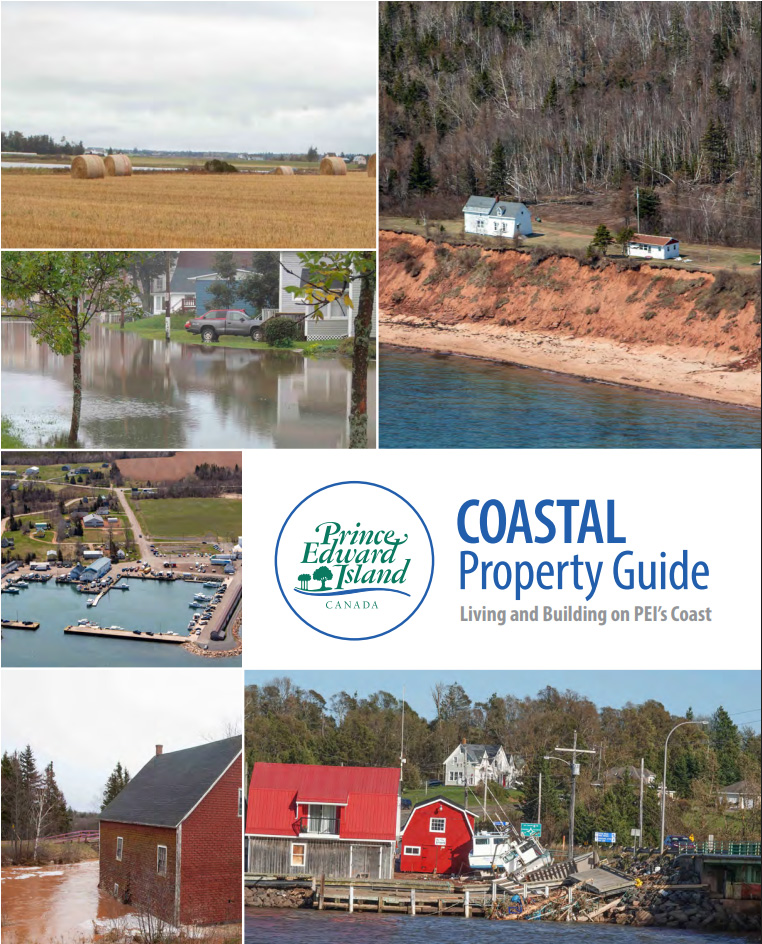
Coastal risks include:
Erosion
The wearing away of land along the shoreline by waves, tides, storms, wind, rainfall, and rising seas.
Coastal flooding
Coastal flooding happens when seawater temporarily moves onto land during storms, high tides, storm surge, or extreme weather.
Storm surge
Storm surge is a temporary rise in sea level caused by strong winds and low pressure during storms, pushing seawater onto land.
Sea-level rise
Sea-level rise means ocean levels are increasing over time, making coastal flooding and erosion more frequent and severe, and eventually permanent.
Inland flooding
Inland flooding happens when heavy rain, snowmelt, blocked drains, or poor drainage cause water to collect on land.
How can I adapt to these risks?
Avoid
The safest long-term option is to keep new development away from areas that may flood or erode.
Retreat or relocate
Move buildings, wells, septic systems, driveways, or other infrastructure farther from coastal hazards.
Accommodate
Modify buildings or properties to reduce damage, such as raising structures, improving drainage, or protecting utilities.
Use nature-based approaches
Use vegetation, dunes, wetlands, or restored buffers to help reduce flooding and erosion where appropriate.
Resist or protect
Hard shoreline structures such as seawalls, riprap, or armouring may provide short-term protection in some cases, but they can be costly, require maintenance, affect neighbouring properties, and do not protect against flooding.
Remember
Work in a watercourse, wetland or 15 m buffer zone requires permits and may be restricted depending on location and current regulations.