Home / What do we do? / Climate Change Coordinators Across Government

Climate Change Coordinators Across Government

Helping bring climate action into everyday government decisions.


Did you know?


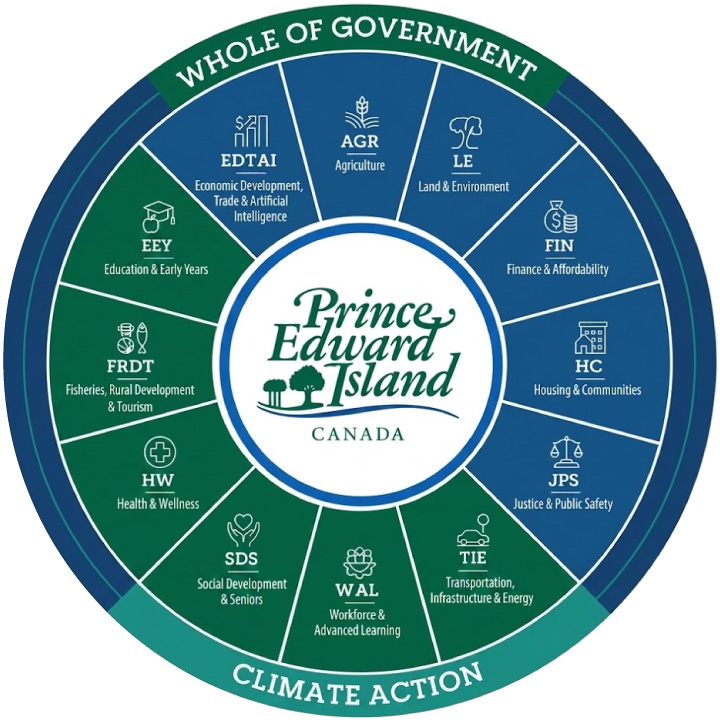
Every provincial government department has a designated Climate Change Coordinator to help reduce greenhouse gas emissions, prepare for climate impacts, and support climate-informed decision-making across government. Coordinators help connect departments, share climate information, support training, and strengthen collaboration so that climate change is considered in programs, policies, planning, and investments.

A circular infographic for Prince Edward Island illustrating a 'Whole of Government' approach to 'Climate Action,' featuring numerous surrounding segments for provincial departments.

What Do Climate Change Coordinators Do?


Apply a Climate Lens

Coordinators support the use of a climate change lens in government decision-making, including policies, programs, and Executive Council materials.

Connect Departments

Coordinators act as a link between their department and the broader climate change network, helping connect the right people, share information, and identify opportunities for collaboration.

Build Knowledge & Capacity

Coordinators receive training and help identify climate change learning needs within their departments. They also support training and awareness for colleagues.

Track Progress

Coordinators help gather information for the annual Minister’s Report on Climate Change, which tracks progress, commitments, expenditures, and government-wide action.
Climate Action Across Government

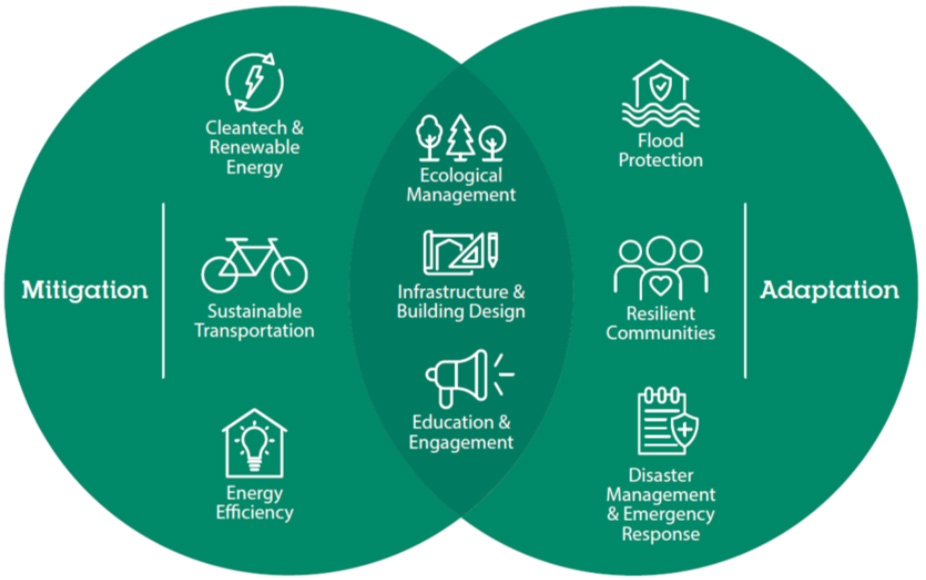
The coordinator network supports a whole-of-government approach to climate action. Coordinators help departments consider both of the following core pillars in their work:

Climate action across government

Mitigation

Reducing the causes of climate change by lowering greenhouse gas emissions. This includes improving building efficiency, using renewable energy, supporting cleaner transportation, and reducing emissions across sectors.

Adaptation

Preparing for the impacts of climate change that are already happening or expected to worsen over time. This includes planning for flooding, extreme weather, heat, drought, impacts to infrastructure, risks to communities and industries, and coastal erosion.

Key Areas of Impact (2024–2025)

Coordinators help connect overarching climate goals with specific departmental work. Recent progress across key sectors includes:


1. Energy Efficiency

Coordinators connect climate goals with department work on buildings, housing, and public infrastructure.

Progress Snapshot

13,196 households improved their energy efficiency through provincial programs, and 21 heat pumps were installed in social housing.


2. Transportation

Coordinators support information-sharing across departments working on cleaner and more resilient transportation options.

Progress Snapshot

143,346 rides on rural public transit were reported, and 30 active transportation projects were completed across the Island.


3. Nature and Biodiversity

Coordinators help connect climate action with work to protect and restore natural systems.

Progress Snapshot

PEI reported a 30% production increase at the provincial tree nursery and secured 215 hectares of private land to be designated as a natural area.


4. Emergency Preparedness

Coordinators help departments consider climate risks in planning for emergencies and service continuity.

Progress Snapshot

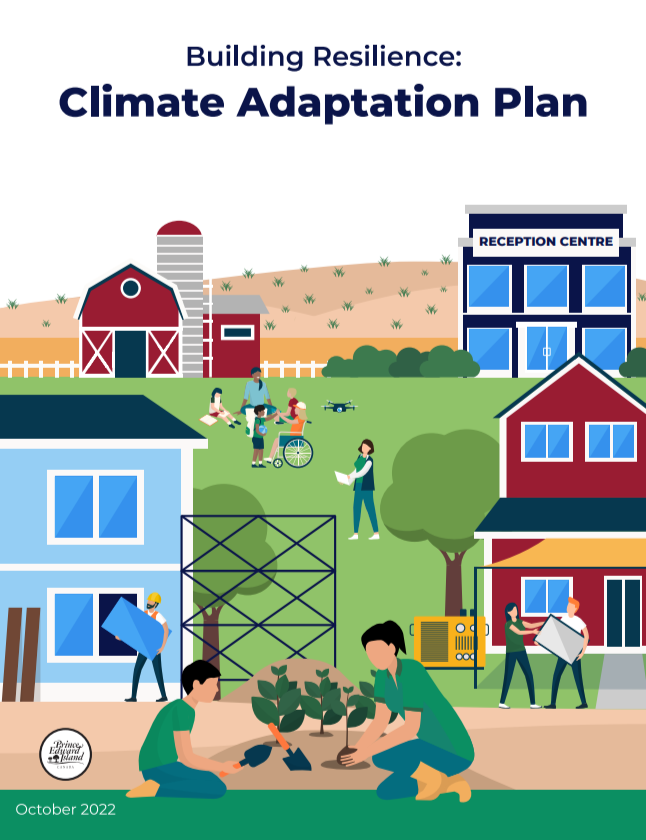
Launched a Reception Centre Map and a Fuel-Station Resiliency Sites with Generators Map to help Islanders find services and fuel during emergencies.


5. Coastal Resilience

Coordinators support cross-department awareness of coastal and climate hazard information.

Progress Snapshot

Launched updates to CHRIS (Climate Hazard and Risk Information System) and completed 716 Coastal Hazard Assessments for coastal properties.