Home / What Do We Do?

PEI's Climate
Adaptation Plan

The Building Resilience: Climate Adaptation Plan is the province's roadmap for building resilience across the province.

Adaptation Plan

Building Resilience:
Climate Adaptation Plan

As Prince Edward Island faces growing climate-related risks — including flooding, coastal erosion, extreme heat, heavy rainfall, drought, and stronger storms — the Building Resilience: Climate Adaptation Plan guides how the province is preparing for these changes and reducing risks to people, communities, infrastructure, industries, and natural areas.
6 Priority Themes
5 Guiding Principles
99 Actions Identified
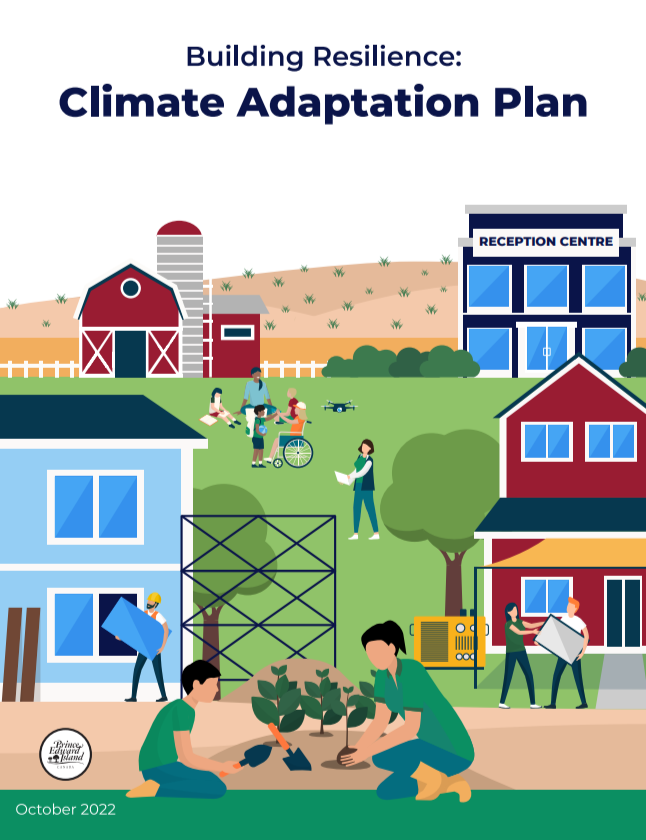
Building Resilience: Climate Adaptation Plan cover

Building Resilience: Climate Adaptation Plan · October 2022

Six Priority Themes

Themes of
Climate Adaptation

The Climate Adaptation Plan is organized around six key themes. Together these guide actions to help Prince Edward Island prepare for and respond to the impacts of a changing climate.

01

Disaster Resilience & Response

Preparing for and responding to extreme weather to protect people and services.

Developed the Reception Centre Map.
Funded backup generators with Island gas stations to keep 80% open during outages.
Provided to-go kits for foster families displaced by weather emergencies.
02

Resilient Communities

Strengthening communities, infrastructure, and land-use planning to withstand climate impacts.

At-risk areas surveyed for erosion.
Coastal Hazard signage installed across PEI.
Shoreline protection projects completed in Souris and Riverside Drive.
03

Climate-Ready Industries

Helping key sectors adapt operations and supply chains to climate risks.

Risk assessments conducted for key industries like fishing and tourism.
Climate adaptation workshops and CART training delivered with CLIMAtlantic and ClimateSense.
PEI Federation of Agriculture Climate Adaptation plan published.
04

Health and Mental Well-being

Protecting physical and mental health from climate-related impacts.

Heat Alert Response System (HARS) developed.
Farmers Talk program offered to farmers and their families.
Installed heat pumps in social housing units.
05

Natural Habitat and Biodiversity

Protecting and using natural systems to reduce climate risks.

3,718 Coastal Hazard Assessments completed.
1.1 million trees planted through the 2 Billion Trees program.
575 ha of land acquired through the Buffer-Zone Buyback program.
06

Knowledge & Capacity

Building skills, data, and awareness to support climate adaptation.

Direct mail-out on coastal hazards sent to 17,000 coastal property owners.
Two full time Climate Change Coordinator positions established.
Climate Change integrated into K-12 curriculum.